

Asking a single question at the United Nations Film Festival in Poland in 2023 changed Dan Frank’s life—and an important documentary’s future forever.
Leaning across the lunch table towards Ukrainian producer Polina Herman, he asked: “What can I do to help you?” And he meant it.
The Assistant Professor of Digital Media: TV/Film Production has built a career as a documentary producer making a difference in the world. He’s directed and co-written HGTV shows, was nominated for a Grammy, and won a New England Emmy, bringing the truth to topics ranging from the world of teenage cowgirls in Cow Sense to Never Again Para Nadie, which documents peaceful protests against a Rhode Island prison holding ICE detainees that turned tragically violent.
When Frank met Herman, a mother to a young son, she had just been forced to immigrate to Los Angeles following Russia’s invasion of Ukraine in February 2022. She said in an email interview, “It was an unplanned immigration for which I had no preparation.” Moving her career and her life to the U.S. was difficult, especially at first, with limited English and without any contacts in the American industry. “The Universe gives you opportunities and the right people along the way,” Herman said. “One of those people on my path is Dan Frank.”
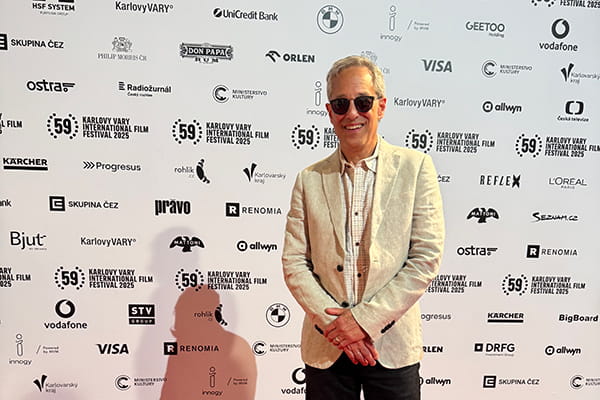
Frank invited her to send him a pitch for anything she was working on. A few weeks later, she emailed him a film proposal that would ultimately become a 2025 International Documentary Association IDA Award Nominee. Frank immediately jumped on board as an executive producer, never guessing that the film would ultimately take on a life and a following of its own.
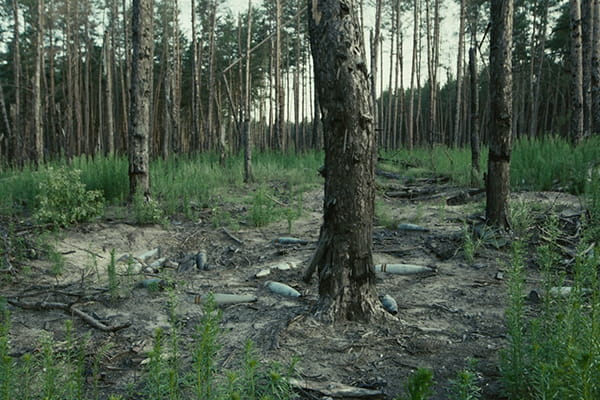
Directed by Dmytro Hreskho, Divia tells the story of those who cannot speak for themselves–Ukraine’s animals and ecosystems– documenting the natural beauty of Ukraine and how it is being desecrated by Russian attacks. Using drone technology and also filming on foot with a small crew over the course of two years, Hresko, who is Ukrainian, took on significant personal risk to film in rural areas of the country, returning again and again to document how these places of overwhelming tranquility and natural beauty were broken by war.
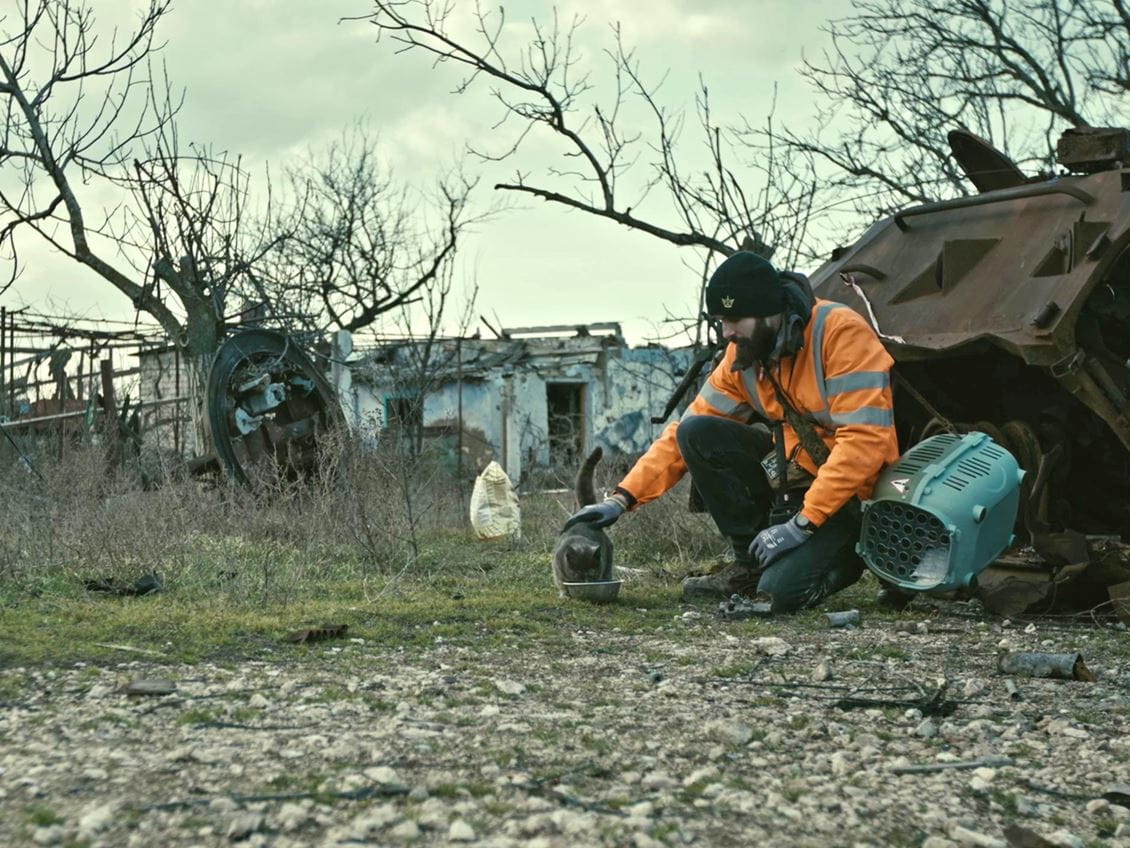
In the first part of the film, viewers are overwhelmed by the peace of the forests and waterways of the Ukrainian countryside. A majestic stag grazes in a sunlit clearing—but later the camera returns to this place only to find deer decomposing there, presumably from gunfire or from consuming something toxic leftover by Russian soldiers. In other affecting scenes, a gorgeous ladybug flutters its wings on top of a lethal missile, a man risks his own life to coax abandoned cats out from under a burned-out tank to eat, and aid workers exhume a badly decomposing human body from an overgrown field.
There is no dialogue in Divia, no script—but the main protagonist is nature itself. Sound artist Sam Spector’s score is a script alone, incorporating real sounds from the conflict into a sharp, sometimes violent score that gives perfect voice to war’s ebbs and flows, tragedies, and miracles.
Responding to interview questions from inside Ukraine, Hreskho said, “Filming near combat zones was never an easy decision, but the mission of Divia made that risk meaningful. We felt a responsibility to show what the war is doing not only to people but also to the land itself—the forests, rivers, animals, and entire ecosystems that have no voice. Nature cannot testify in tribunals, so the camera had to become the witness.” At one point while filming in Kerson after the Kakhova dam explosion, the crew came under fire, and Hreskho experienced Russian shelling aimed not only at the city, but at the volunteers rescuing injured people and animals.
“War isn’t really necessarily the way we picture it,” Frank explained. “It’s sort of this strange spasmodic thing where you see bombs going off and then it’s quiet, and then there’s a firefight. It’s not the way we see it in movies.”
For his part, Frank has put in full effort to get Divia into top-tier film festivals and in front of North American audiences. “He brought an outside perspective that helped us understand how this very Ukrainian story might be read by audiences far from the war,” Hreshko explained. “He never tried to change the soul of the film; his focus was on how to present it to the world.”
That came to fruition when Divia was screened to sold-out audiences at the prestigious 2025 Karlovy Vary International Film Festival in the Czech Republic. But walking the red carpet was no dream come true for Frank or the rest of the team. “We were all dressed up at the premier,” he remembered. “It’s not that it felt wrong to be there. It’s just that we have so much more work to do together for Ukraine.”
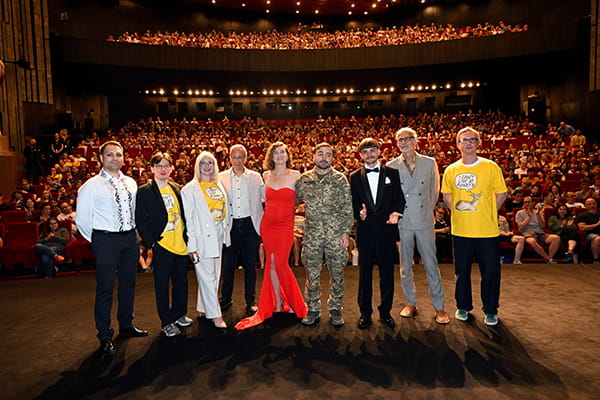
Frank is determined to get Divia screened not only at additional festivals over the next year, but also streaming in people’s living rooms, and in American classrooms. It was also shown at the COP30 2025 UN Climate Change Conference in Brazil.
He joked that as a producer, his job is not to become famous. It’s to help behind the scenes with distribution, communications, and even in securing funding.
“If you make documentary films, you’re always looking for opportunities to help other people,” he said.