

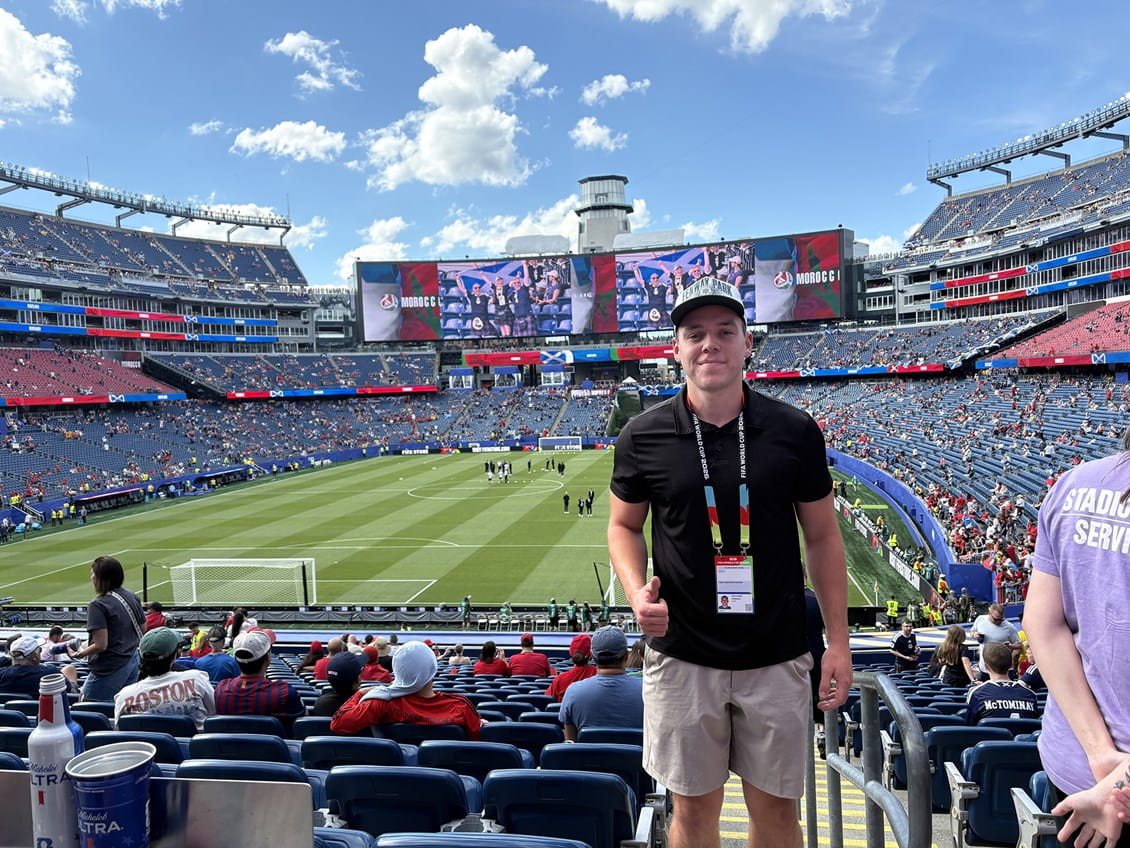
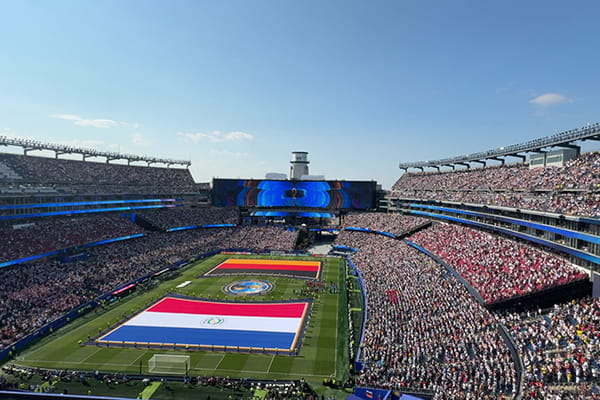
Roaring crowds, international competition, and unforgettable moments—this summer, the FIFA World Cup transformed Gillette Stadium into a global epicenter of the soccer world. Thousands of fans from around the world filled the stadium between June 13 and July 9, creating an electric atmosphere as they cheered on their countries during seven World Cup matches.
Countless individuals worked behind the scenes to ensure every match ran seamlessly, and one of them was William Savage ’28, a hospitality management major and summer intern with Kraft Sports + Entertainment. Throughout the tournament, Savage supported World Cup operations, assisting with inventory management, match preparation, game-day logistics, and stadium transitions.
We caught up with him to learn more about his internship, the lessons he took away from the experience, and what it was like to contribute to one of the world’s biggest sporting events.
Responses have been edited for clarity and length.
What was it like to be part of the team at Gillette Stadium, and what surprised you most about the scale of the operation?
Savage: Being part of the team at Gillette Stadium for the FIFA World Cup 2026 was incredible. What made it truly special was seeing fans from all over the world bring their unique traditions and passion into one venue. What surprised me most was the sheer logistical scale, as well as the very precise attention to detail required by FIFA. Operating out of the main food and beverage warehouse, witnessing the nonstop volume of inventory moving behind the scenes opened my eyes to what it takes to run a global event.
Can you walk us through a typical match day? What were your responsibilities?
Savage: Match days demanded early arrivals, adaptability, and stamina through extremely long hours. Working in food and beverage warehouse operations, my core responsibility was keeping venue supply lines fully stocked. My shift revolved around high-volume inventory management, including rapidly restocking high-demand items like burgers, hot dogs, pizzas, and chicken tenders to busy concession stands. When halftime hit, our rapid restocking ensured frontline staff could keep lines moving without running out of product.
How has your hospitality management education at Endicott prepared you for this internship?
Savage: At Endicott, I’ve taken classes that cover things like inventory management, supply chains, and making operations run as efficiently as possible. Those concepts sounded great in the classroom, but working at Gillette Stadium showed me what they really look like in the real world.
Every event means making sure the right products are in the right place at the right time, even when things get busy. I’ve been able to help manage inventory, keep warehouse operations running smoothly, and see firsthand how good planning and teamwork make such a huge difference behind the scenes.
It’s been really rewarding to connect what I’m learning at Endicott with the fast-paced environment at Gillette. This internship has definitely helped me understand how everything works together to create a great experience for fans and guests.
Was there a specific moment during the tournament when it really hit you that you were helping support one of the biggest sporting events in the world?
Savage: It really hit me during the Scotland vs. Morocco match. The stadium was packed to maximum capacity, and the energy in the building was wildly chaotic. Scottish fans came out to have a great time, which meant our restocking duties went into overdrive to keep up with the intense demand for food and alcohol. Stepping out into the concourse during a brief breather and hearing the deafening roar of both fanbases made me realize that our hard work in the warehouse was directly powering the game-day experience for thousands of fans.
How has being part of the FIFA World Cup changed the way you think about your future in sports and entertainment venue management, and what lessons will you take with you from this experience?
Savage: It reinforced that this is the career path I want to pursue. Getting the chance to contribute to an event of this scale has given me a better understanding of what it takes to run a world-class venue and has made me even more excited about a future in sports and entertainment venue management.